A Letter to My Clients (English Version)

When working on a project, I often encounter clients who come in holding a photo of some house they found on Instagram or Redfin, saying they want something just like it. I feel a quiet sadness for these clients — especially those building their own homes — because they may be giving up the chance to create something that is truly and uniquely theirs.

In those moments, I ask them: "What is the single most important element of this house to you? Is it the view? The light? The way the land rises and falls? The relationship to neighboring buildings? How the interior spaces flow together? A specific functional need? The circulation? Or maybe even your cat or dog is important enough that the whole house should be designed around them?" Whatever the answer, there is always one or two things that every owner genuinely cares about. Once we find that thing, we use it as the starting point — and from there, we build a house that is truly what the client wants: an authentic and interesting design.

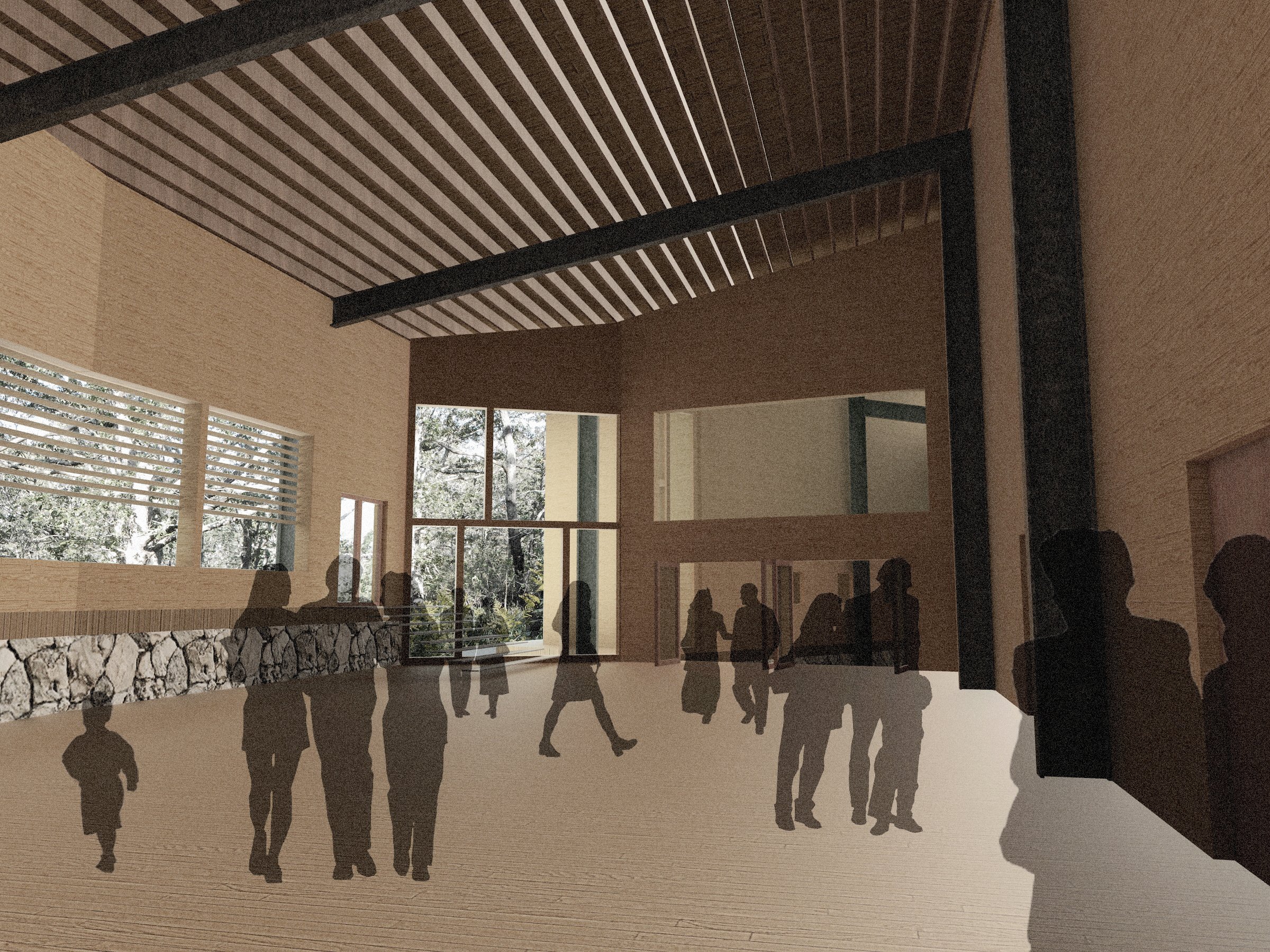
This morning, for no particular reason, I found myself thinking about a design I did as a student, twenty years ago — a small art center on Martha’s Vineyard, an island off the coast of Boston. I pulled it up to take another look. The execution is rough by today's standards, but the ideas are more interesting than some projects I've done over the course of my professional career. The island had almost nothing on it — what left an impression was the undulation of the terrain and the density of the vegetation. My original instinct was to create a building in which you could still fully experience the surrounding environment: the shifts in topography, the variety of plants. The site sloped downward from south to north, which naturally suggested distributing the program along the contours. Since most of the spaces were art studios, large north-facing windows and clerestories could deliver the steady, diffused northern light painters prize. The terrain also generated variation in ceiling heights — taller volumes for large classrooms, painting and sculpture studios, and dance rehearsal rooms; lower volumes for small classrooms and offices. Each found its proper scale. The gaps between building masses were planted with native trees, so no matter which direction you looked, you were looking at green.

Martha's Vineyard, Massachusetts

Martha’s Vineyard, Massachusetts, 2006

Since the whole point was to experience the natural environment, I maximized the interface between building and ground, making the entire complex single-story. The roofscape reads like scattered leaves drifting across the land. The artist and student housing called for in the program was broken into individual units — clusters of five or six — distributed organically across the site like a natural village, connected by covered walkways. Even the parking layout was threaded into the landscape like tree branches, not immediately obvious at first glance, but playful to navigate. I explored more than a dozen arrangements of program and massing before landing on the final configuration with my studio professor.

Site Plan Arrangement Study Model

Site Plan 场地平面

For the architectural language, I was deeply influenced on this project by the Canadian husband-and-wife firm Patkau Architects. Timber-framed roofs carried by steel beams and posts float at varying heights, and natural light filters in softly through the gaps between roof planes. The plan organization drew on my love of Suzhou classical gardens — seemingly disordered at first glance, but governed by an internal logic that respects both functional circulation and topographic flow. The main circulation paths were intentionally aligned with the site's contour lines, minimizing excessive uphill and downhill walking and effortlessly facilitating an accessible, universal design.

Building Components Fitting Onto the Terrain

Precedence Study

For the presentation, in addition to the standard diagrams, plans, sections, and renderings, I built a large wooden model. The contour lines were cut from quarter-inch wood sheets using a handheld jigsaw — I'd run down to the woodshop in the basement of the design school every day at lunch. My right forearm would be sour after each session. It took over a week just to cut all the pieces, and about two weeks total for the whole model. That kind of time investment is a luxury that commercial practice no longer affords; digital models and hand sketches have to stand in, but they never quite measure up.

Wood Model
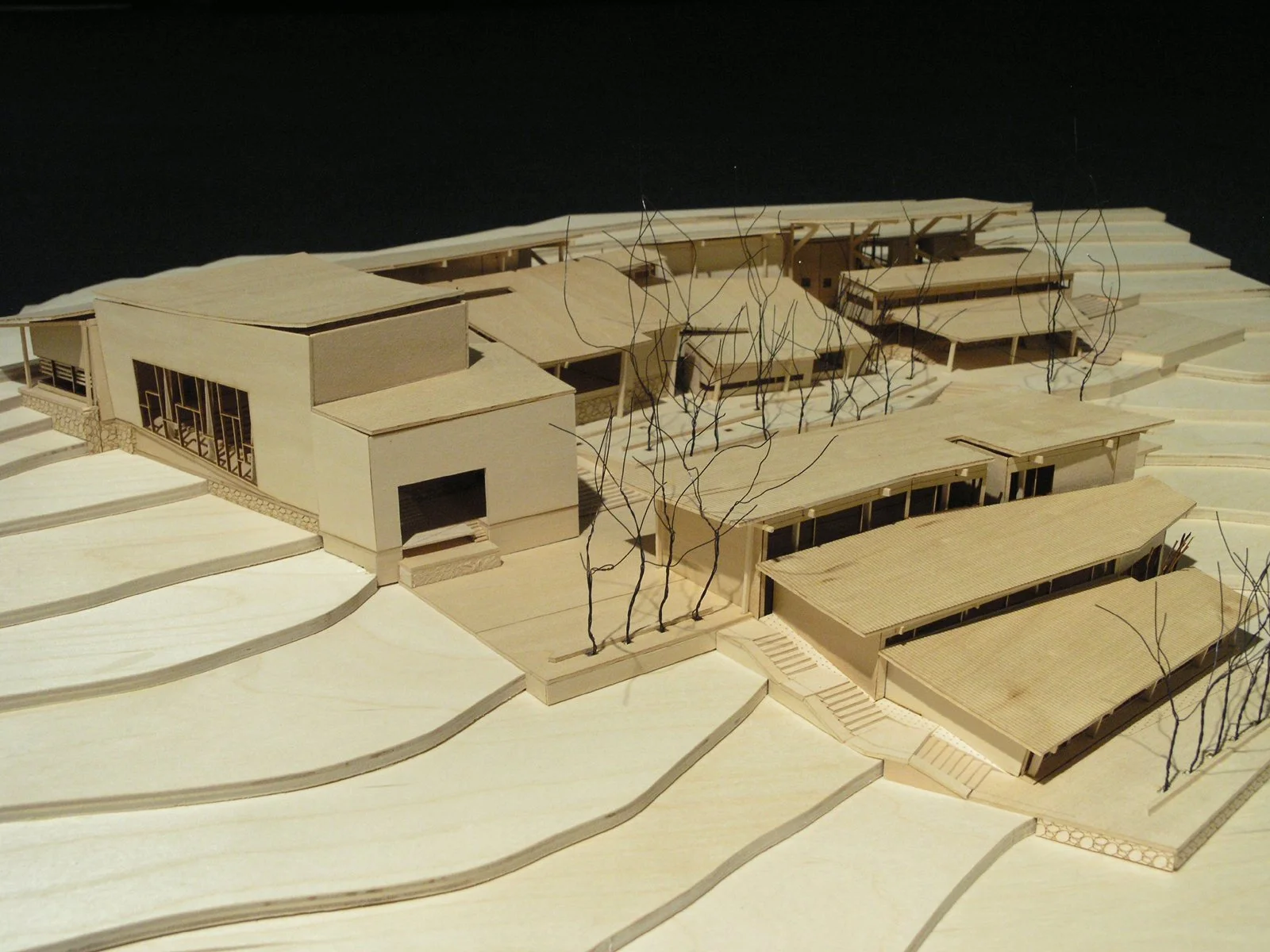
Wood Model

I set out to write a short note and ended up with all of this. I suppose I just want to say to my clients: design is a process. It isn't about copying someone else's design. It's about finding a starting point, committing to it, and following it through. That's how good design happens. In an era overflowing with Instagram aesthetics and Midjourney imagery — abundant and instantly forgettable — don't follow blindly. Don't shortchange yourself. You've already invested in the design fee. Let's walk this journey together, take in everything along the way, and arrive at a result that is both right and surprising. Onward — together.

(A brief aside: the Patkaus, that remarkable husband-and-wife duo, have relatively low outpout but made every project count. In recent years they've departed from their Pacific Northwest vernacular and evolved a design language so vital that even young architects look on with envy. As a spiritual student of theirs, I find it genuinely inspiring.)

(One more footnote. The final review lasted an entire day, and my project received unanimous praise — one of only two final reviews in my three and a half years at the GSD that went that way. That evening, I came back to my studio in high spirits, only to find my wallet gone from my coat pocket — a coat that had been hanging right at my desk. Anyone who's been through the GSD experience knows a final review typically takes place in a designated classroom, not at your own desk in “The Trays.” Which meant someone had stolen my wallet during the review while I was away from my desk. It was the only time in my life I've ever had my wallet stolen — knock on wood. The thief went on a shopping spree with my credit cards, racking up hundreds of dollars at a Staples near Cambridge. I reported it to the police, which brought out detectives from the Cambridge Police Department. They pulled the store’s security footage, got a clear shot of the suspect's face, and actually came to the school to have me identify him. I didn't recognize the person, and the trail went cold. But honestly, I wasn't troubled by the loss of the wallet — not then, not afterward. A great final review at the GSD is more than enough to wash everything else away.)

Wood Model

Wood Model

Wood Model

Dormitory Cardboard Model

Sectional Diagram

Program Distribution Sketch

Rendering

Rendering

Rendering

Rendering

Rendering
Rendering

Rendering

Rendering

Rendering

Rendering

Rendering

Rendering

Rendering

Summer Program Wall Section

Winter Program Wall Section

Why You Must Opt for Full Architectural Service?

When building a house, hiring an architect for full-service is absolutely necessary - you can't cut corners, nor can you abandon the process halfway. Today, I will provide a detailed explanation of what full-service entails and its importance.

Firstly, I am referring to new construction for high-end custom residential projects. If it's another type of project, like an extension, ADU (Accessory Dwelling Unit), or a small commercial project, the content of this article may not fully apply. Since high-end custom residential design is one of my main areas of work, I will explain the steps for this type of project:

Step 1. Concept Design
In this phase, the client needs to provide the architect with a brief, including site information, ideally with a survey, as well as functional requirements (such as the number of rooms, functions of each room, estimated areas, etc.) and design preferences (like preferred architectural styles and spatial layouts). The architect will analyze site characteristics (such as terrain, sunlight direction, trees, driveways, privacy, noise sources, etc.) and, combined with planning requirements and building codes, propose the building's form, spatial layout, and interior design concepts. This concept design may be expressed through hand sketches, massing models (physical or digital), and reference images.

Step 2. Schematic Design
At this stage, the architect uses 3D modeling software (like Revit) to create a three-dimensional model that includes floor plans, elevations, and sections. The architect analyzes spatial relationships and functional flows, and proposes the most reasonable layout that meets the client's needs for space and aesthetic appeal. The primary interior and exterior materials, window sizes and positions are also selected, and 3D renderings are produced. For those with a more generous budget, physical models may be made to provide a more tangible understanding of the building. Throughout this process, the architect and client hold regular meetings to review progress. The architect adjusts the design based on client’s feedback until both parties are satisfied. I as an architect often enjoys receiving constructive feedback from the client, for this will inspire me to do something out of my ordinary design habit.

Some experienced clients may also hire a General Contractor (GC) during this phase for Pre-Construction Services, offering suggestions from a construction perspective and providing preliminary cost estimates. It's also the best time for a geotechnical engineer to conduct soil analysis, which informs the structural engineer's foundation design and the civil engineer's drainage design.

By the way, to ensure the design is on the right track, some city governments may require complex or large projects to hold a Pre-Application Meeting before submitting a formal application. This meeting usually happens at the end of the schematic design phase.

Step 3. Permit Application
During the permit phase, the architect further develops the schematic design. This involves collaboration with other engineering departments, such as structural engineer, civil engineer, landscape designer, and fire sprinkler installer. The architect recommends trustworthy partners with whom they have a long-term relationship and coordinates their technical details into the architectural drawings. To a large extent, the architect acts as the project manager.

The architect must also perform necessary calculations, such as building coverage, impervious surface area, and HVAC capacity, to meet government approval requirements. Simultaneously, the architect refines the schematic drawings into permit drawings, including details that demonstrate the satisfaction of planning and building code requirements, such as wall sections that clearly explain waterproofing and insulation. Parts of the details serve to illustrate the relationship between structure and architecture. The design must also meet energy efficiency standards, which often include the prescription of high-performance heat pumps, water heaters, insulation exceeding code requirements, efficient HVAC distribution, solar panels, etc. The architect proposes the most cost-effective energy solutions based on the project characteristics and completes the corresponding documentation.

Finally, the architect submits all the necessary documents, including architectural, structural, civil engineering drawings, surveys, and required forms and calculations, to the government. The architect stays actively engaged with the authorities to ensure any requested revisions are handled promptly until the building permit is obtained.

If a GC provides Pre-Con services, they should provide more accurate construction cost estimates based on the refined drawings.

Step 4. Interior Design
A well-designed building not only needs an attractive exterior but also an interior that is comfortable and aligned with the owner's tastes. As a full-service architect, our services include interior design for key spaces such as the entrance, living room, kitchen, dining room, master bedroom, master bath, study room, and home theater. The design deliverables include material plans, elevations, ceiling plans, and 3D renderings, which help ensure there are no surprises during the construction process. Along with the drawings, the architect also provides detailed schedules of materials, appliances, bathroom fixtures, lighting, etc. These schedules include product models, sizes, and suppliers' contact information, making procurement straightforward and reducing potential disputes between the homeowner and the general contractor during construction.

As part of the interior design, the architect also provides lighting layout and wiring, as well as electric outlets placements. For unique details like home theaters or concealed light troughs, the architect provides large-scale detailed drawings.

Step 5. Construction Documentation and Administration
Once the permit is secured and interior design is complete, construction can officially begin. Before construction starts, the client should obtain bids from at least three GCs, using the completed permit drawings and interior drawings as bid documents. During this bidding process, the architect acts as the client's best advisor, helping to review the bids and ensuring they match the design without any omissions. Once a GC is selected, the architect shifts to a support role, providing construction administration (CA) services.

During CA, the architect answers any design-related questions that arise, provides large-scale drawings for clarification, and makes periodic site visits to observe construction progress and quality. The architect reviews material samples submitted by the GC, particularly when substitutions are proposed, ensuring the quality and design intent are maintained. The architect also reviews shop drawings from suppliers for custom items like stairs, handrails, and canopies etc. Additionally, the architect verifies payment applications submitted by the GC and their subcontractors, ensuring work meets standards before the client releases payments. As construction nears completion, the architect prepares a punch list to ensure the GC finishes the job without leaving loose ends, and finally signs off on substantial completion.

Through these five stages, the architect plays an indispensable role in a high-end custom residential project. Some clients, trying to save money, exclude the architect from the fourth and fifth stages, only to find themselves facing disasters during construction, turning the site into a scene of chaos. To save four- or five-figure design fees, they end up losing six figures on the construction cost, with progress dragging on and, in some cases, leaving the project unfinished. These stories are all too common.

So, you might wonder, with so many tasks included in an architect's services, how much does it cost? I'll address that in future articles.

Evolution of House Design in the Pacific Northwest

Throughout the time span of a century or so, the evolution of the house design style in the Pacific Northwest has maintained a few common characters as a response to the climatic and geographic contexts. Whether it is a gable roof with protruding eave, or a flat roof with a separately attached overhang, or a sculptural form with shelter carved out of the massing, the successive generations along the historic timeline all try to address the same challenge posed by the regional climate. The physical environment has barely shifted, yet the design philosophies have evolved under the environmental pressure from the larger global trend.

Read More