
A step-by-step guide for homeowners
Building a custom home, whether a ground-up construction or a major remodel, is an exciting opportunity to create a space tailored to your lifestyle. At the same time, it is a complex process involving design, engineering, regulatory approvals, and construction.
Understanding how the process works—and who is involved at each stage—can make the experience much smoother and help set realistic expectations.
Most residential projects involve three key participants:
Homeowner (client)
Architect and design team
General contractor (builder)
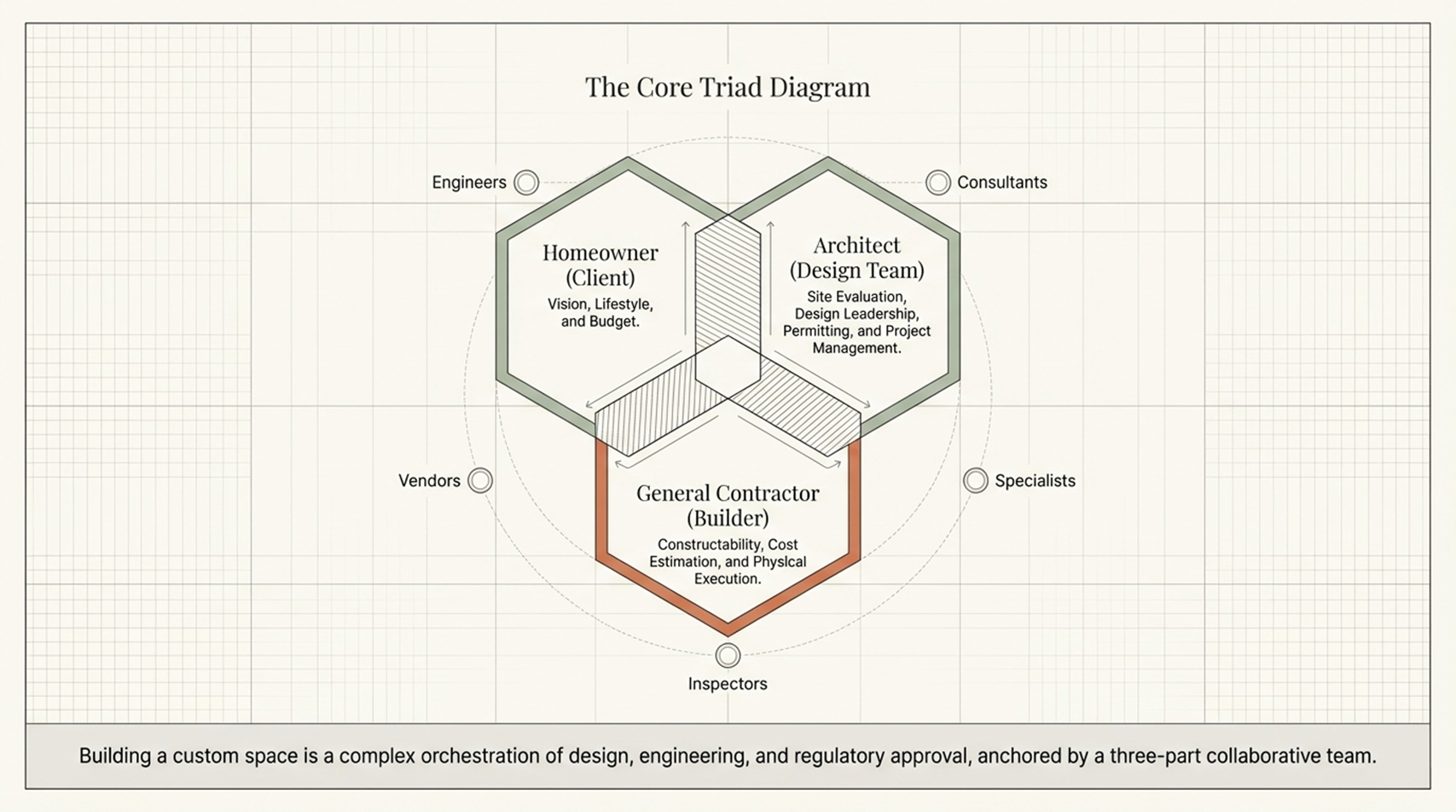
In addition, several specialized consultants may contribute technical expertise depending on the conditions of the site.
Below is a simplified overview of how the process typically unfolds. It includes 5 phases.
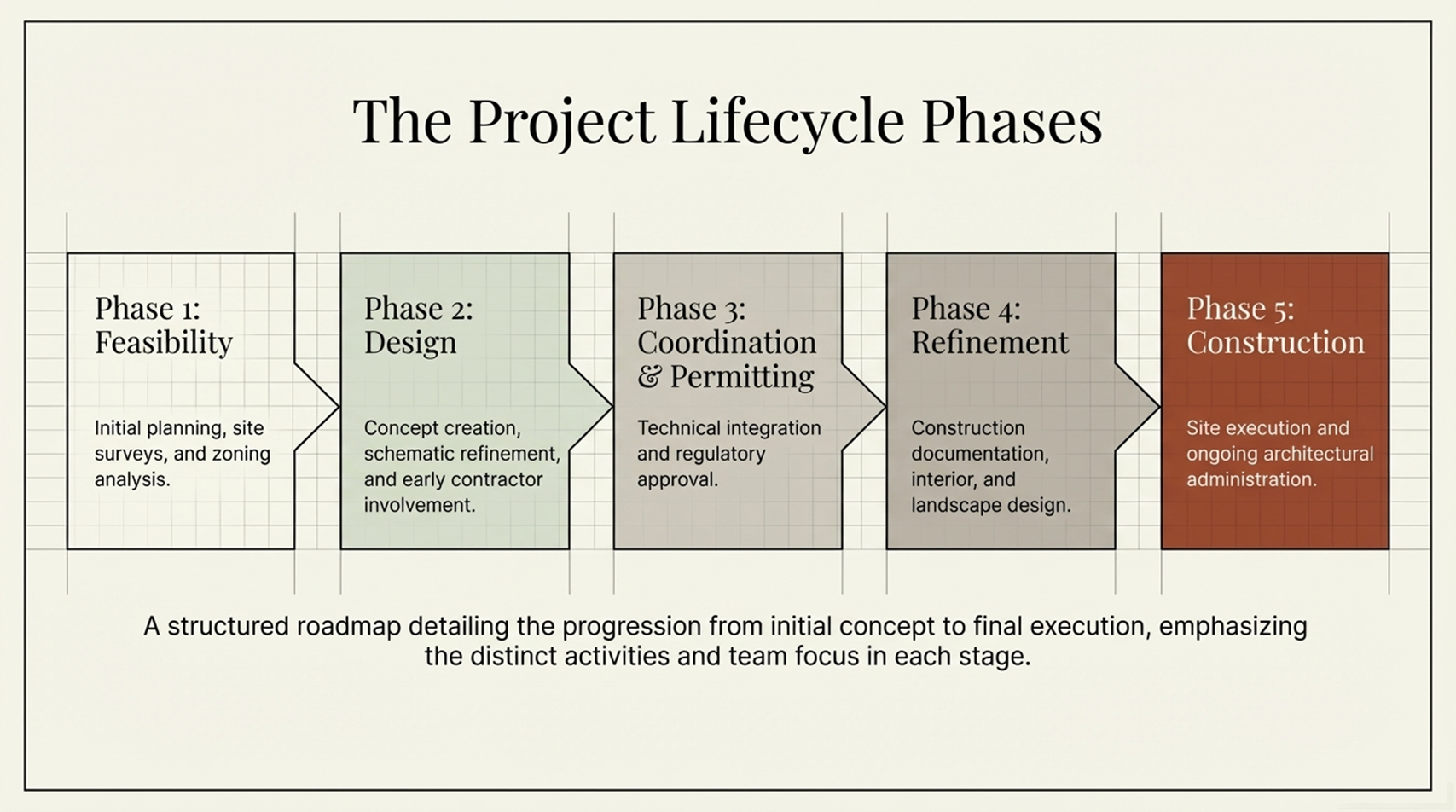
PHASE 1: FEASIBILITY
1.1. Initial Planning and Hiring an Architect
Most homeowners begin by hiring an architect, who helps guide the early stages of the project.
The architect’s role includes:
Evaluating the potential of the property
Understanding the homeowner’s goals and budget
Coordinating early consultants
Leading the design process
Managing permitting
Bringing an architect into the process early allows important decisions about the site, zoning, and feasibility to be addressed before design begins in earnest.
1.2. Zoning and Feasibility Study
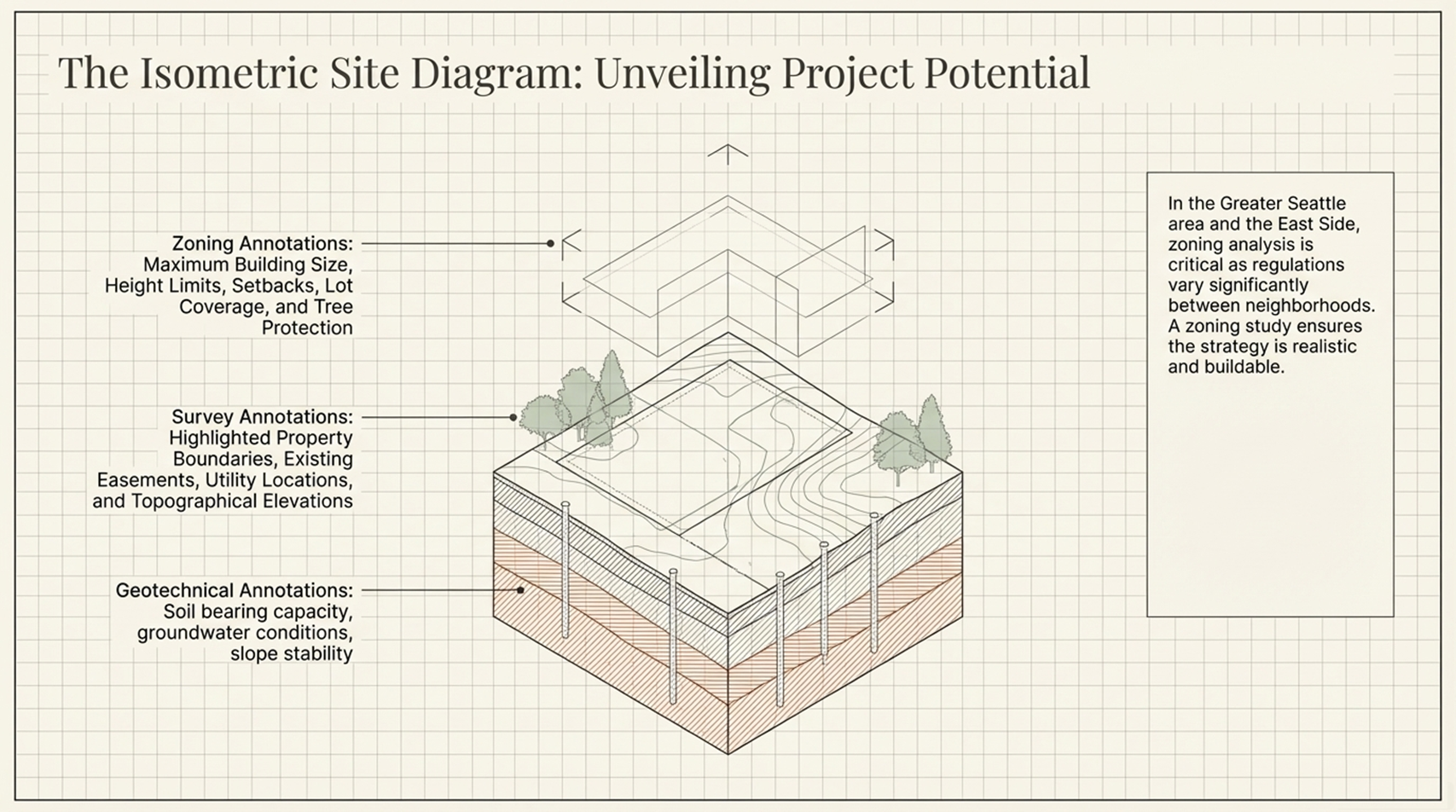
Before design moves forward, the architect studies the property’s local zoning regulations.
Zoning determines what can legally be built on the property, including:
Maximum building size
Height limits
Required setbacks
Lot coverage
Tree protection regulations
Environmental restrictions
In the Greater Seattle area and the East Side, zoning analysis can be especially important because regulations can vary significantly between neighborhoods.
A zoning study ensures the design strategy is realistic and buildable before major design work begins.
1.3. Site Survey
A project typically begins with a professional land survey.
A licensed surveyor measures and documents:
Property boundaries
Existing buildings
Easements
Utility locations
Trees
Topography and elevations
The survey becomes the base drawing used by the architect and engineers throughout the project.
The architect often helps coordinate the survey and uses it to evaluate how the building can best sit on the site.
1.4. Geotechnical Investigation
A geotechnical engineer studies soil conditions on the site.
This typically involves drilling several small borings to analyze the soil.
The resulting geotechnical report provides recommendations for:
Soil bearing capacity and foundation design
Drainage considerations
Groundwater conditions
Slope stability (if applicable)
This information allows the structural engineer to design the foundation appropriately, and to inform the civil engineer of the drainage characteristics of the property.
phase 2: design
2.1. Architectural Design
Once site conditions and zoning parameters are understood, the architectural design process begins.
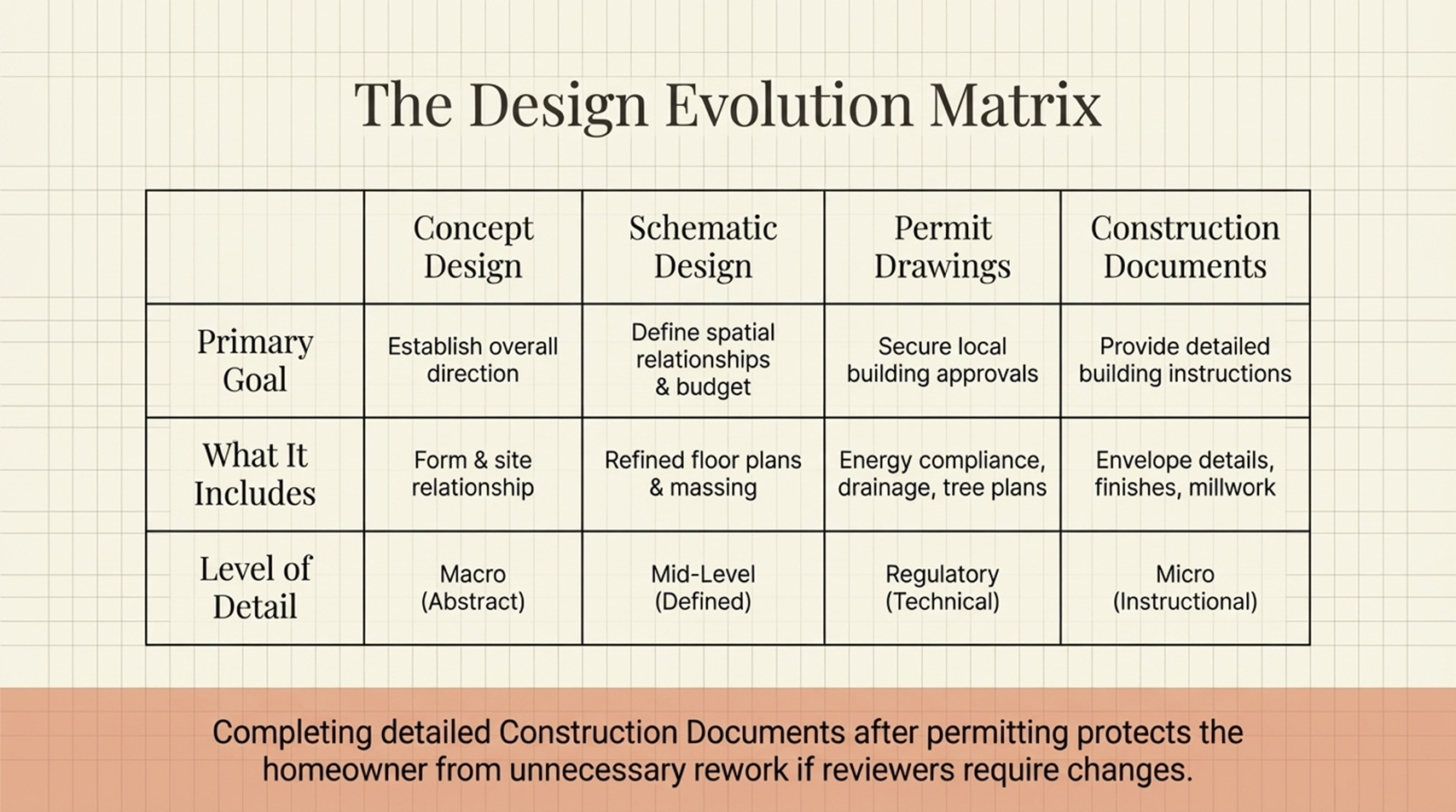
This stage typically progresses through several phases.
Concept Design
Early exploration of:
overall layout
building form
relationship to the site
architectural character
The goal is to establish the overall direction of the project.
Schematic Design
During this phase:
floor plans are refined
major spatial relationships are established
building size and massing are confirmed
At this stage the design becomes defined enough to begin discussing cost.
2.2. Early Contractor Involvement
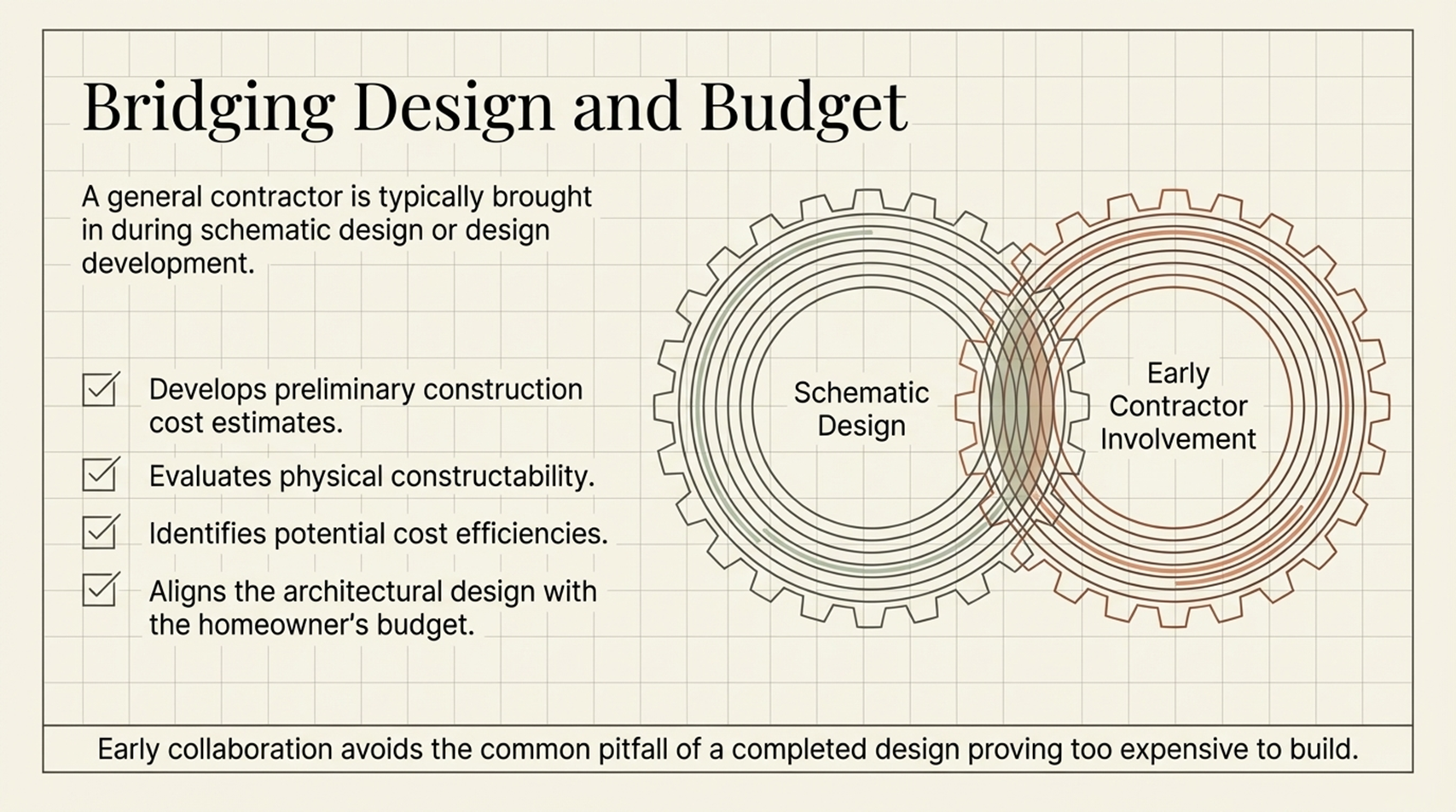
A general contractor is often brought into the project during schematic design or design development.
Early contractor involvement can help:
develop preliminary construction cost estimates
evaluate constructability
identify potential cost efficiencies
align the design with the homeowner’s budget
This collaboration helps avoid situations where a completed design later proves too expensive to build.
PHASE 3: COORDINATION AND PERMITTING
3.1. Consultant Coordination
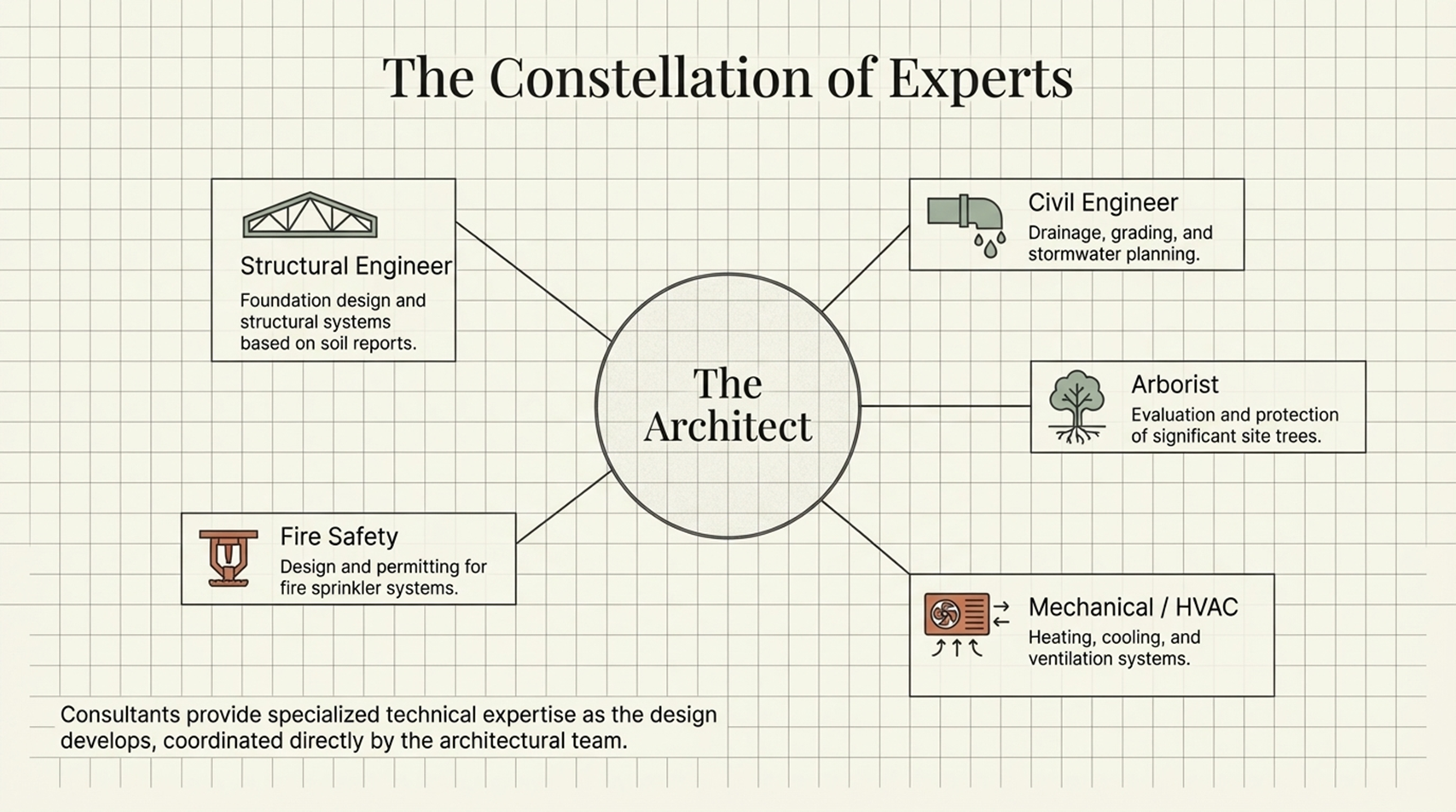
As the design develops, several technical consultants may join the project.
These may include:
Structural engineer – structural system and foundation design
Civil engineer – drainage, grading, and stormwater planning
Arborist – evaluation and protection of significant trees
Mechanical / HVAC consultant – heating, cooling, and ventilation systems
Fire Safety consultant – design and permit the fire sprinkler system
These consultants help ensure the design meets technical and regulatory requirements.
3.2. Permit Documentation and Submission
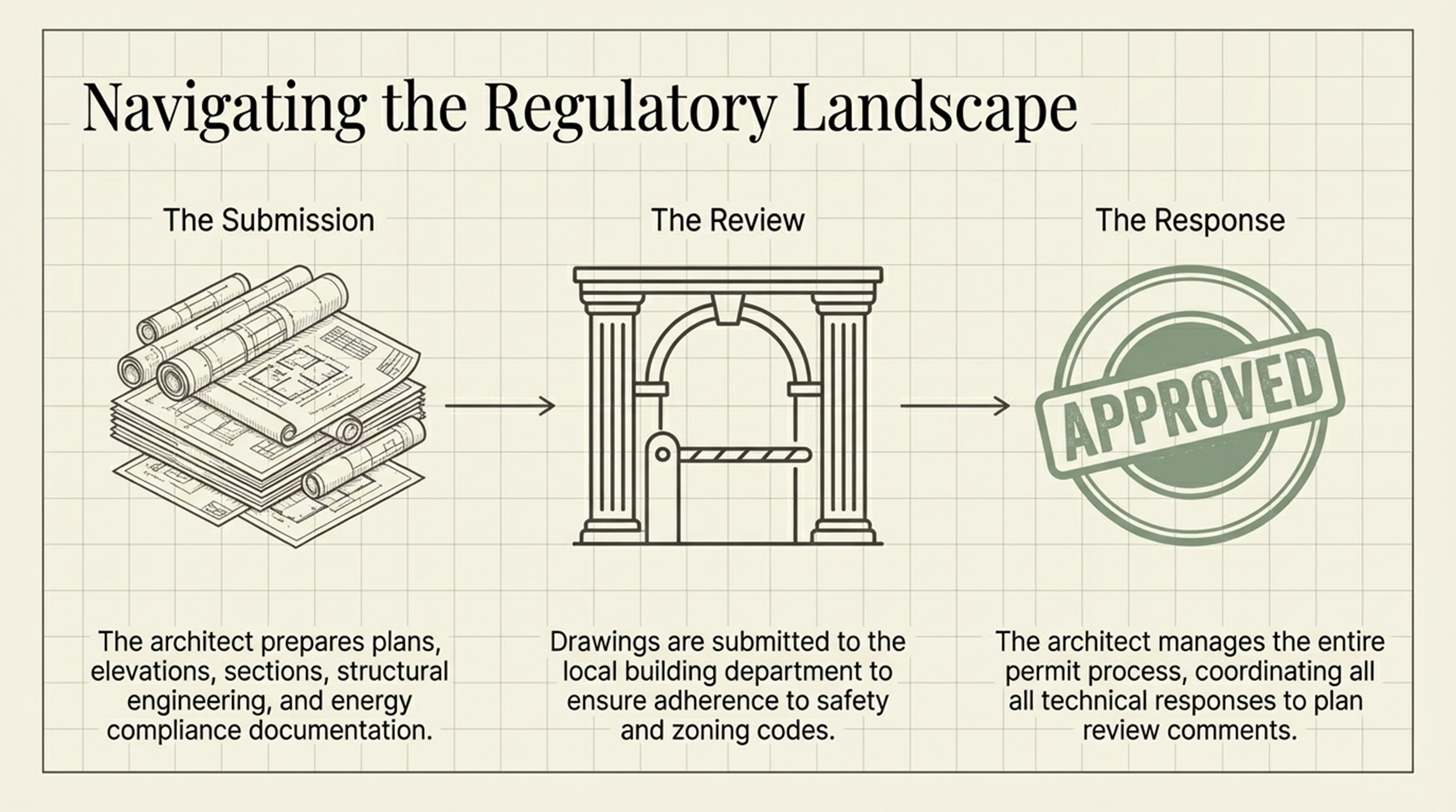
Once the design is sufficiently developed, the architect prepares the permit drawing set.
Permit drawings typically include:
architectural plans, elevations and sections
structural engineering drawings
energy compliance documentation
drainage and site plans
tree protection plans (if required)
These drawings are submitted to the local building department for review.
The architect typically manages the permit process and coordinates responses to plan review comments.
PHASE 4: DESIGN REFINEMENT
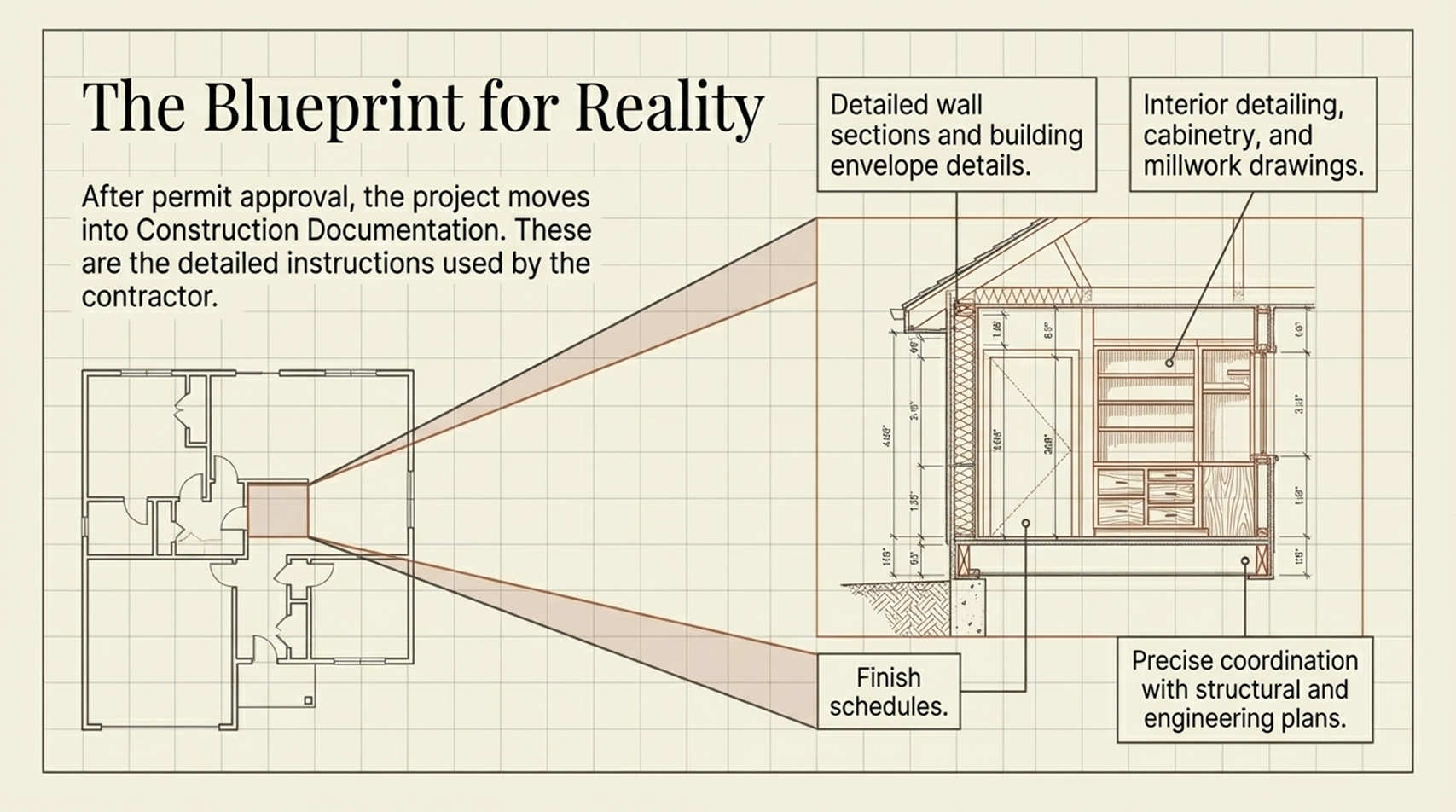
4.1. Construction Documentation
After the permit is approved, the architect prepares the construction drawing set.
These drawings provide the detailed instructions used by the contractor to build the project.
They typically include:
detailed wall sections
building envelope details
interior detailing
cabinetry and millwork drawings
finish schedules
coordination with structural and engineering drawings
Completing these drawings after permitting allows the architect to refine the design.
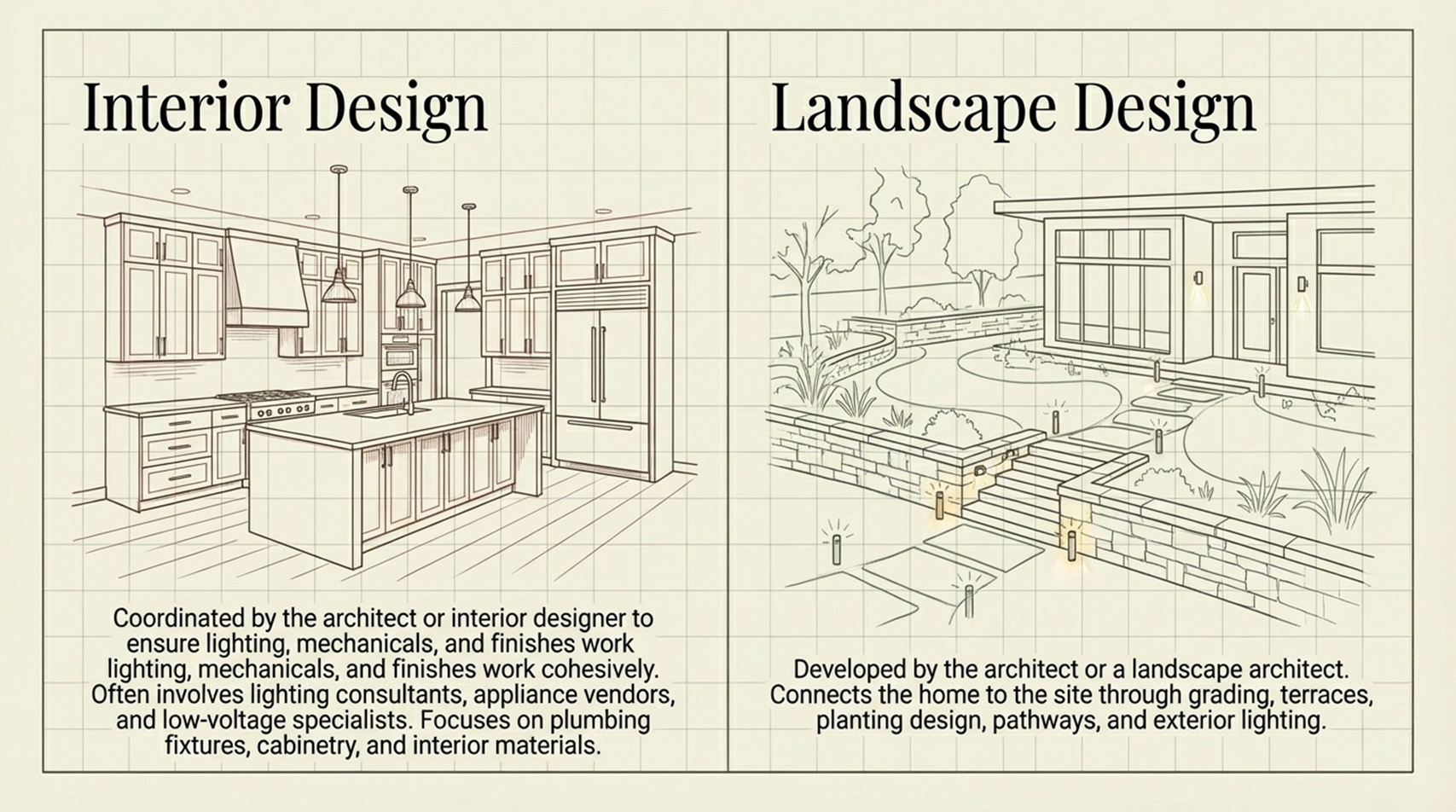
4.2. Interior Design
For many projects, the architect or interior designer develops the interior design of the home.
This may include:
kitchens and bathrooms
cabinetry and millwork
lighting design
selection of plumbing fixtures
interior materials and finishes
Interior design coordination ensures that architectural elements, lighting, and mechanical systems work together cohesively. A lighting consultant, an appliance vendor and a low-voltage consultant might be involved in this phase.
4.3. Landscape Design
Landscape design may be developed by the architect or by a landscape architect, depending on the project.
This can include:
site grading and terraces
planting design
outdoor living spaces
pathways and garden walls
exterior lighting
Thoughtful landscape design helps connect the home to its site and extend living spaces outdoors.
phase 5: construction
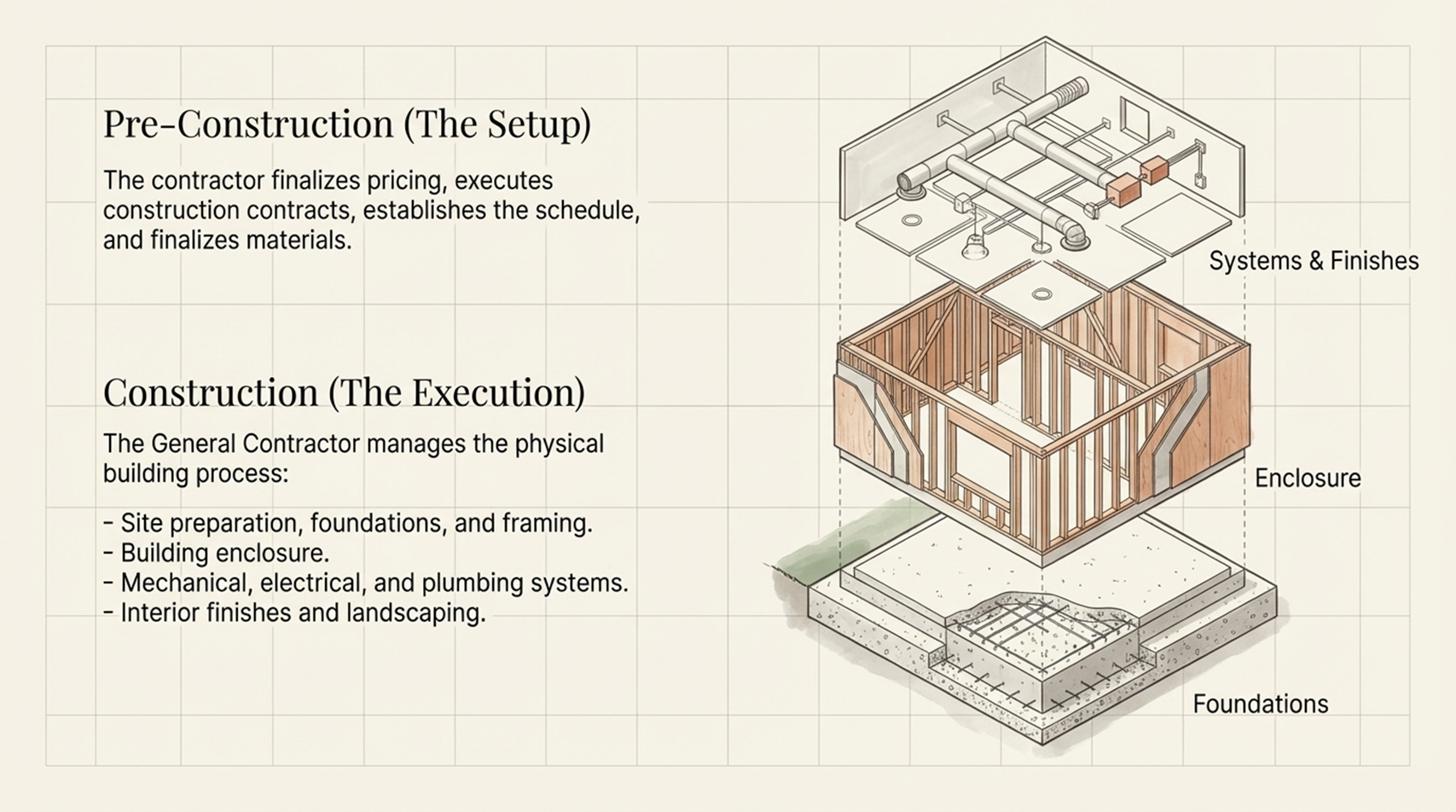
5.1. Pre-Construction
Once the permit is issued and construction documents are complete, the project moves into pre-construction.
During this stage:
the general contractor finalizes pricing
construction contracts are executed
materials and finishes are finalized
the construction schedule is established
5.2. Construction
The general contractor manages the building process, including:
site preparation
foundations and framing
building enclosure
mechanical, electrical, and plumbing systems
interior finishes
landscaping
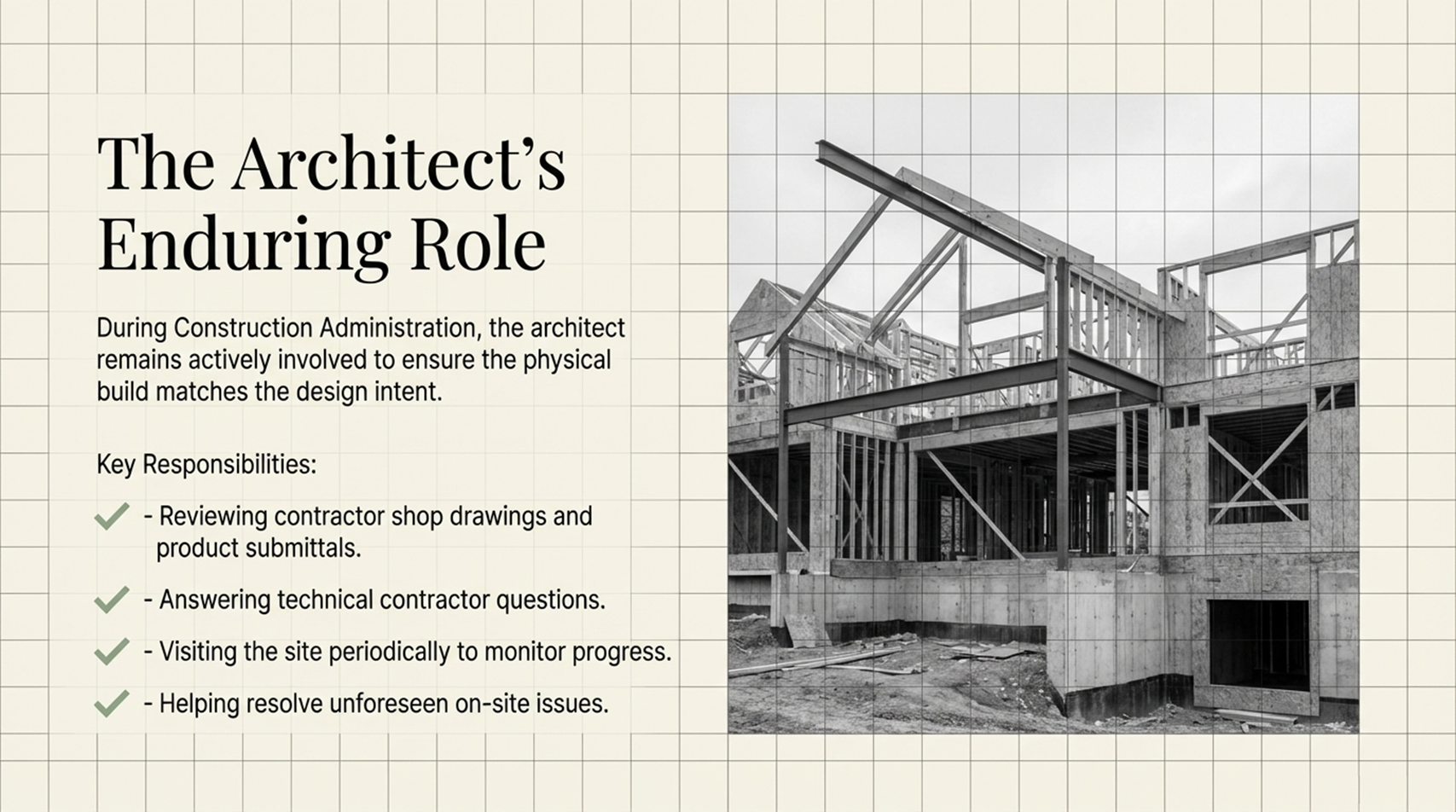
5.3. Construction Administration
During construction, the architect continues to assist the project by:
reviewing shop drawings and product submittals
answering contractor questions
visiting the site periodically
helping resolve unforeseen issues
ensuring the design intent is carried through.
Final Thoughts
Building a home is a collaborative process involving architects, engineers, consultants, and builders.
In general:
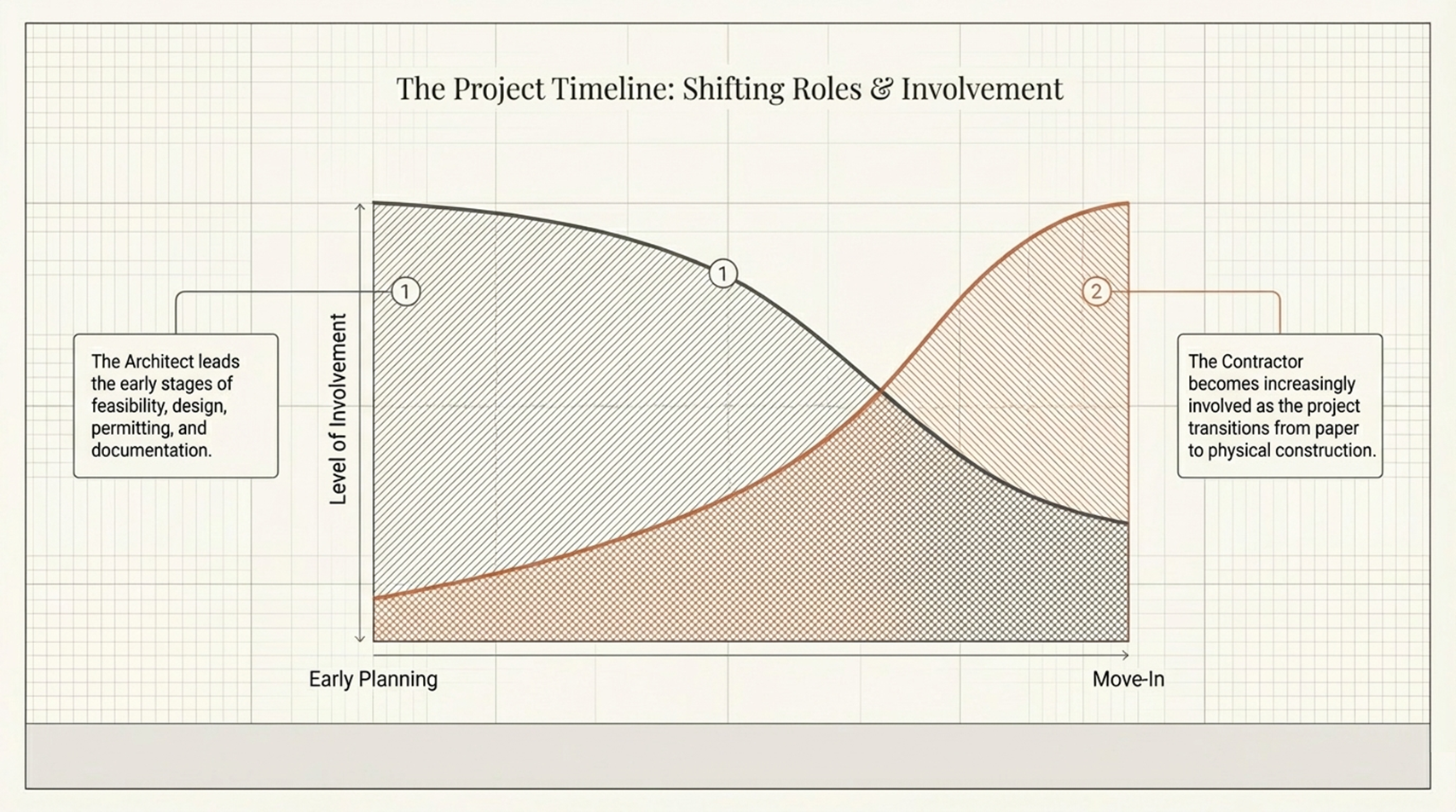
The architect leads the early stages of feasibility, design, permitting, construction documentation and construction administration.
Consultants provide specialized technical expertise as the design develops.
The contractor becomes increasingly involved as the project approaches construction.
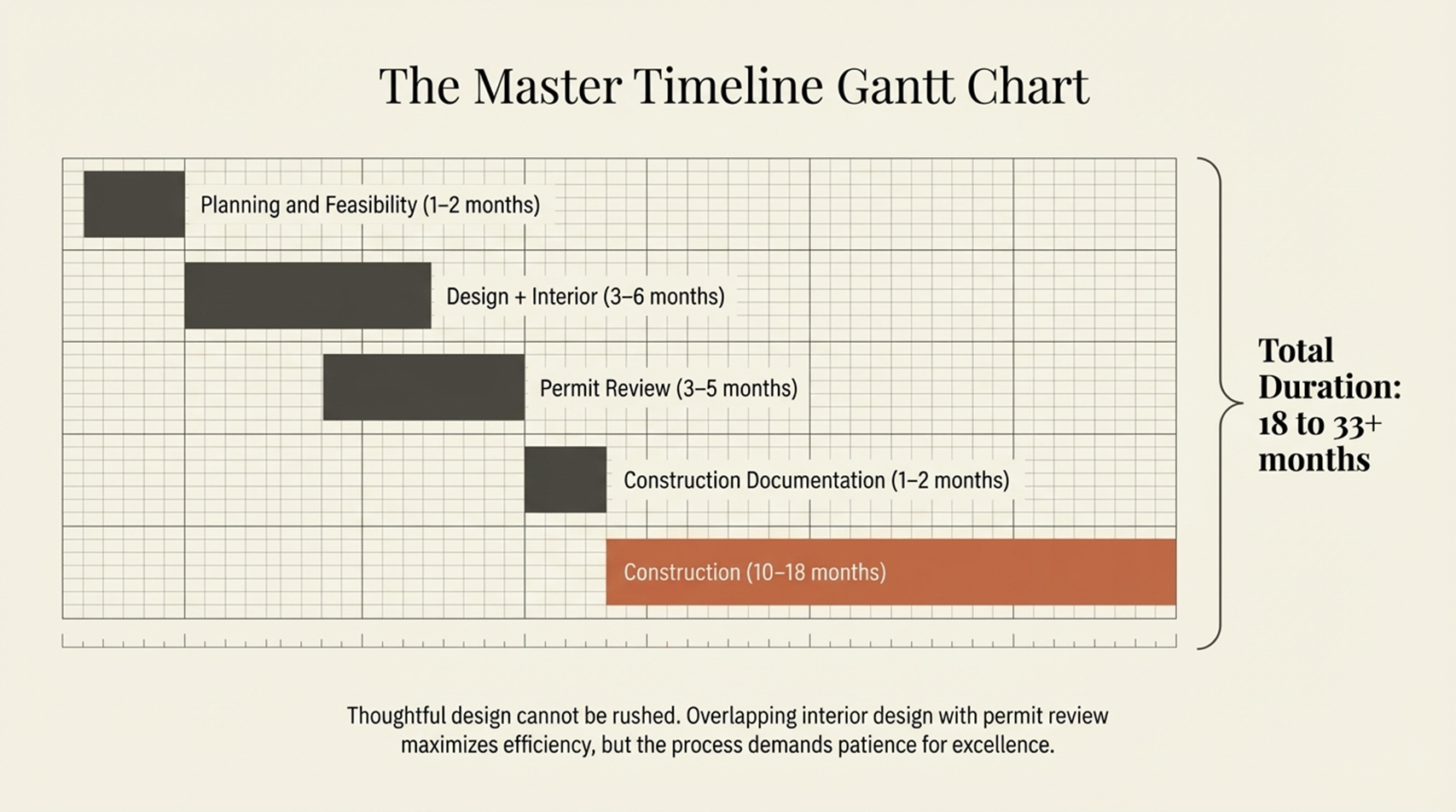
Typical overall project timelines:
Planning and feasibility: 1–2 months
Design (+ interior): 3–6 months
Permit review: 3–5 months
Construction documentation: 1–2 months
Construction: 10–18 months
With careful planning and the right team, the process can be both smooth and rewarding—resulting in a home that reflects thoughtful design and lasting craftsmanship.
If you are considering building a new home or major addition and would like to discuss your project, feel free to reach out to our studio.